
A Look at the INSITE FW ’28 Footwear Foams Catalog
Walk through our updated footwear foams catalog – now with a convenient interactive layout – as you plan your FW ’28 footwear designs.


Shoes are an amazing invention. They can help us move fast, look stylish, and protect our feet from tough surfaces. But our need for footwear can often be a burden on the earth’s resources. Polyurethane (PU) materials—commonly used to create insoles and midsoles—can be a particular strain on the planet, with the vast majority of them ending up in landfills.
Luckily, the future of PU is brighter than most legacy materials. PU is one of the most promising compounds for introducing more sustainable manufacturing methods to the footwear industry. One of those methods is recycling. And like many eco-friendly solutions, there are many ways to do it. In this blog, we’ll introduce you to some of the most effective methods of recycling PU for reducing waste and bolstering a more circular footwear economy.
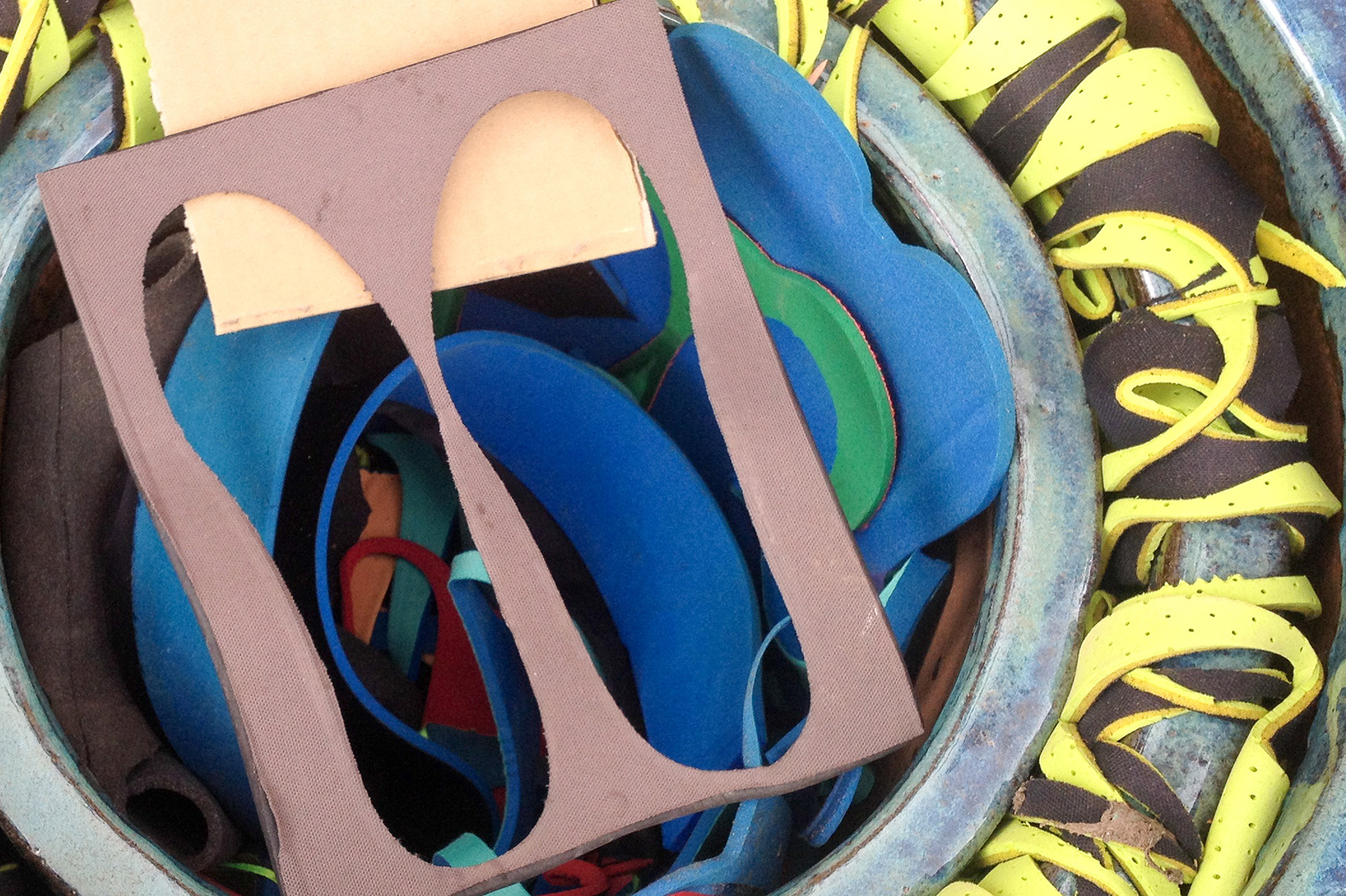
Sustainability should always start at the source. In footwear production, this means addressing waste issues at the factory. PU insoles and midsoles are typically made by die-cutting shapes from a sheet of PU material or molding poured PU into a 3D shape and trimming off the excess. The scraps from this process vary in size, but they add up to a lot of wasted material over time.
With post-industrial recycling, the scraps are collected, shredded, and blended with fresh polymers to create a new batch. This leaves as little on the cutting room floor as possible for a much more efficient manufacturing process.
The big advantage of post-industrial recycling is that the PU feedstock has a known formulation and a high material purity. This makes it easier to re-batch using already existing processes. And often post-industrial recycling comes with little to no degradation in material performance.
Like any form of recycling, factories must be diligent to track the source of the scraps before recycling and ensure the correct blending of materials.
Post-consumer recycling is what most likely comes to mind when you think about recycling in general. With this type of recycling, customers can donate their end-of-life footwear (old running shoes, for example) at stores or other reclamation centers. The shoes are then sorted into recyclable components, which can then be ground up and re-batched using processes similar to post-industrial recycling.
Post-consumer recycling is one of the most direct ways to cut down on landfills or incinerator use. It also builds greater circularity into the footwear economy by recreating products from existing materials instead of virgin feedstock.
Since there are many types of shoes with a range of materials in addition to PU, post-consumer recycling requires a complex sorting infrastructure. Special care must be taken to handle possible contamination, cross-linking, and a lack of heterogeneity. Some forward-thinking brands account for this by building shoes using just one base substance, i.e. mono-material products, which may go a long way to help with end-of-life recycling.
One of the most advanced forms of recycling to date, chemical recycling uses de-polymerization techniques to break down and recover the chemical building blocks of PU. These can then be reused and synthesized into new foams.
Chemical recycling is the most exciting evolution in recycling technology. It can use either post-industrial or post-consumer waste sources to match the quality and performance of virgin materials. And as it becomes more common to use PU as a mono-material, it opens the possibility of recycling the entire shoe into any number of new components.
Similar to post-consumer recycling, chemical recycling requires investment on the part of brands, both for end-of-life reclamation and what goes into the original product. The energy consumption and process for chemical recycling must also be considered in order to assess its full environmental impact.
The great news is, many recycled PU materials already demonstrate excellent durability and cushioning qualities for footwear. And as brands shift towards a mono-material philosophy, the infrastructure required to support advanced recycling methods becomes even more viable. As the footwear industry continues to address its waste issues, INSITE will continue to innovate alongside it, developing sustainable foams that support both foot health and environmental health.
Walk through our updated footwear foams catalog – now with a convenient interactive layout – as you plan your FW ’28 footwear designs.

INSITE is ready to rock the footwear industry once again at the NW Materials Show on September 2-3, 2026 at the Oregon Convention Center. Here’s what you can expect at INSITE Booth #719 as you plan for your NW Materials Show visit.

The 2026 FIFA Men’s World Cup is underway! No matter your level of play, one thing’s for certain: good cleats can make all the difference in your game. In this post, we break down the features you need to excel on the field.