

Turning comfort into numbers that help you build shoes better.
It’s no secret to footwear developers, but making shoes is hard work. From a designer’s sketchbook to a retailer’s shelves, there are hundreds of high-stakes decisions that can make or break a shoe’s success before it even comes to market. It falls on developers to pick the right materials and components to make the shoe a reality, all while keeping it cost-effective, pleasing to the eye, and feasible at large-scale production.
With all these considerations, there’s a question that often falls by the wayside: how do you make the shoe comfortable? Better yet, how do you make it the most comfortable you can for the most customers possible?
It might be a daunting task, but with the right data from INSITE®, you can turn the subjective experience of comfort into numbers that can help you make better decisions for your customers’ foot health. That’s what makes our ProvenComfort® product testing so valuable. Our researchers can help you select the ideal INSITE cushioning system for your shoe’s form and function, so you can accelerate development and go to market with confidence.
What We Test
At the INSITE Research & Design Lab in Los Angeles, we test both individual foam materials and full cushioning systems to help you find the ideal comfort for your shoe category. Whether you’re working on a groundbreaking innovation or just improving on a time-honored classic, the ProvenComfort method helps you develop an insole, Strobel, and midsole system that maximizes your shoe’s underfoot performance.
Our product testing is founded on the science of biomechanics, giving you the same diagnostic tools available to the world of custom orthotics and elite athletic footwear. Best of all, we can test every category of shoes from high-performance running flats to work boots and casual walkers, so developers in every category can experience the ProvenComfort difference.
How We Test
Our product testing aims to get at the core issues that both brands and consumers care about. Is the shoe comfortable overall? Is the cushioning durable over time? Do the foams and underfoot contours work together to create the ideal balance of performance and support? The core ProvenComfort tests give you the data:
Material Impact Testing
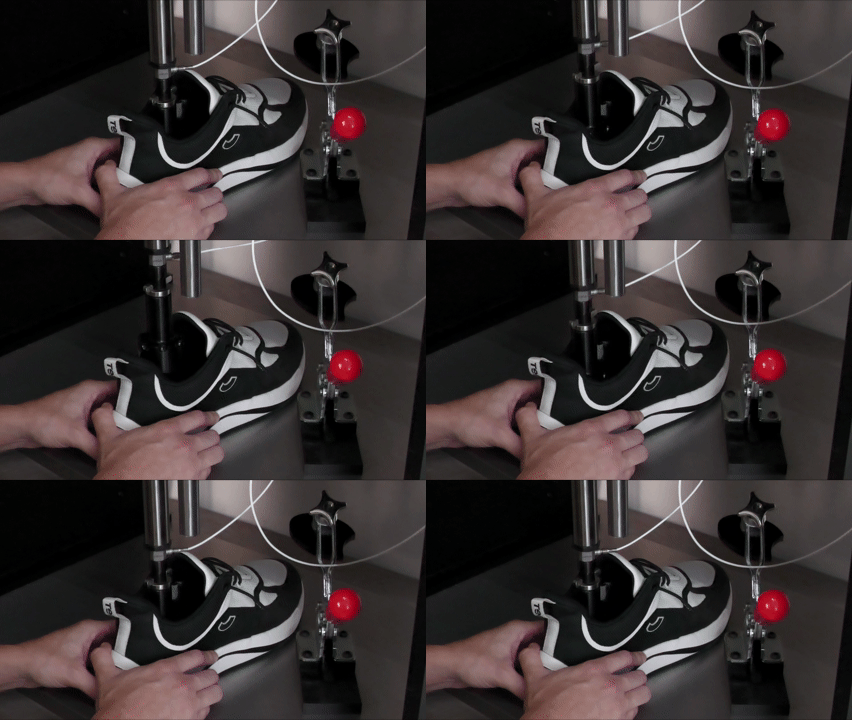
Before exposing foam materials to any other tests, we use a computer-controlled machine to measure its response to impact forces similar to heel and forefoot strikes. This way we can get a better picture of a foam’s shock absorption and energy return properties.

Plantar Pressure Testing
We use plantar pressure sensors embedded in smart insoles to track the underfoot pressure points that can impact comfort and gait. Depending on the needs of the shoe, we might also employ high-speed video cameras or force plates to get a more thorough picture of how the shoe is supporting your customers’ overall biomechanics.

Comfort Perception Testing
Our study participants answer a series of questions about how comfortable they feel wearing a shoe during product testing. We focus on the insole’s general shape, arch support, and cushioning, as well as factors that may impact gait, like a shoe’s stiffness or stability. For sport-specific shoes, participants also answer questions relevant to their athletic activity. Comfort perception testing gives you experience-focused feedback, so you can better understand what your potential customers will think and feel as they’re wearing your products.
From the Lab to Real Life
In addition to the lab, we emulate real-world conditions by bringing testing into the field. We ensure shoes are tested on surfaces relevant to each application like trails, basketball courts, or soccer fields (to name a few), or using strength and conditioning equipment to simulate training or physical labor. Additionally, all athletic footwear is tested with athletes who participate in that specific sport. So, running shoes are tested on runners, while hiking shoes are tested on active hikers. Participants may range from college athletes to casual hobbyists to capture the full scope of experiences.
Start Testing Today
If you’re a footwear developer ready to build data-driven comfort into your shoe, get in touch with us below—or even schedule a tour of the INSITE Research & Design Lab to discover ProvenComfort for yourself! Work with INSITE today, and start building shoes for the way people really move.