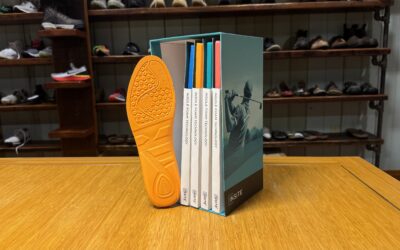
A Look at the INSITE FW ’28 Footwear Foams Catalog
Walk through our updated footwear foams catalog – now with a convenient interactive layout – as you plan your FW ’28 footwear designs.


The 2026 FIFA Men’s World Cup is underway! Whether it’s inspired you to pick up soccer for the first time, or you’ve already enjoyed a lifetime of playing, one thing’s for certain: good cleats can make all the difference in your game.
While many of the pros wear custom soccer cleats, you can find a lot of the same technology in cleats made for the mass market. In this blog, we’ll try to help you navigate those technologies to help you with your next cleats purchase.
Because soccer is played on a variety of surfaces, you will find a range of stud shapes, lengths, and placements, including bladed and conical studs. Blades placed around the heel can help with braking and lateral stability, which can be great for defenders. Meanwhile, conical studs at the forefoot are designed to aid both acceleration and directional changes, making them a great option for dribbling-heavy roles.
Just be aware of your play style and position. Blades may provide the most traction but could be linked with an increased risk of ACL injuries. Conical shaped studs may not offer the same level of traction, but they allow for more rotation as you move, which can be safer for your joints.
Over the years, we’ve seen fads like kangaroo leather, off-center lacing, highly textured outsoles, and more. These days, your uppers are most likely made with advanced synthetic materials built for elasticity and rigidity, thermal regulation, and water resistance. Since soccer is an all-weather sport, your cleats need to endure all kinds of field conditions.
To improve gameplay, uppers may include mesh for flexibility and strategically placed reinforced synthetic microfibers for energy transfer and impact resistance. The result is a cleat designed to work with your natural movement and that can also help you strike the ball with more impact. Just make sure that the upper doesn’t limit the feeling of the ball or cause increased pressure across the top of your foot.
A soleplate is a plate embedded in the cleat designed to provide energy return while distributing pressure underneath the foot more evenly. Soleplates are often made with thermoplastic polyurethane, nylon composites, or carbon fibers.
A soleplate must balance flexibility and stiffness to be effective. For example, a stiffer soleplate can improve your box-to-box sprinting, but more flexibility might be better if your game relies on your multidirectional agility. Comfort-wise, stiffness may help with load absorption, but it could limit your ankle’s range of motion. As a result, if you have high arches or limited ankle mobility, you may notice more stiffness in your lower limbs playing in cleats with more rigid soleplates.
Insoles for soccer cleats present a unique challenge in that they must provide support but also should not interfere with your play. Soccer insoles are generally thinner and less cushioned than your typical insoles, but still act to reduce plantar pressure from both ground impact and stud resistance. They are often made with grippier fabrics, or your cleats may come with them actually glued in place. However, if you need more or less arch support, there are soccer-specific options available. The bottom line is that you want to make sure your feet don’t feel crowded in your boots but that you aren’t feeling excessive foot or leg pain during or after playing.

At the end of the day, your comfort and confidence matter the most. If your feet feel too crowded, or you feel unstable in certain cleats (no matter how they are advertised), it’s best to try a different pair. After all, staying pain- and injury-free can help us to keep playing longer for life, not just for the full 90 minutes!
If you’re a developer looking to add comfort, performance, and support to your next footwear design, let INSITE help you find the best materials for your product.
Walk through our updated footwear foams catalog – now with a convenient interactive layout – as you plan your FW ’28 footwear designs.

INSITE is ready to rock the footwear industry once again at the NW Materials Show on September 2-3, 2026 at the Oregon Convention Center. Here’s what you can expect at INSITE Booth #719 as you plan for your NW Materials Show visit.

In celebration of Global Running Day, we’re breaking down some of the top trends in running footwear to help you find the best shoes for your next run.